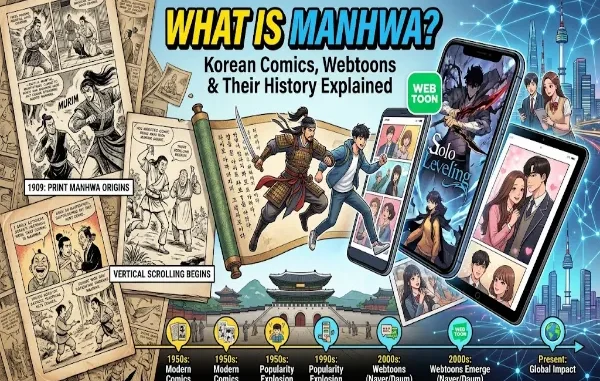
Manhwa is the Korean word for comics and refers broadly to comics created in Korea. Modern manhwa is often published digitally as webtoons, but manhwa and webtoon are not interchangeable terms.
Manhwa is the Korean term for comics and graphic storytelling created in Korea. Unlike the word “manga,” which refers to Japanese comics, manhwa covers a broad range of Korean comics, from traditional print publications to modern digital series and webtoons.
If you have discovered Korean comics through your phone, you may already have encountered manhwa without realizing it. Colorful fantasy adventures, emotional romance stories, intense action series, psychological thrillers, and stories about reincarnation or supernatural powers have helped introduce manhwa to readers far beyond Korea.
The word itself is simple: “manhwa” essentially means comics in Korean. It is not the name of a particular genre or artistic style. Instead, it describes a broad medium that can include many different types of stories, audiences, formats, and visual styles.
Manhwa has also changed significantly over time. Traditional Korean comics appeared in newspapers and magazines long before smartphones existed, but the rise of the internet created a major transformation. Digital platforms made it possible for creators to publish stories online and for readers to access new episodes directly from their phones.
This digital evolution eventually helped popularize the webtoon format, which uses a continuous vertical layout designed for scrolling on smartphones. Many modern manhwa are published as webtoons, often in full color and with regular episode releases.
That distinction is important because manhwa and webtoon do not mean exactly the same thing. Manhwa refers to Korean comics as a whole, while webtoon describes a digital comic format that is particularly associated with vertical scrolling.
Today, manhwa covers almost every major storytelling category. Readers can find action and fantasy, romance, horror, thriller, comedy, slice-of-life, historical stories, reincarnation adventures, and many other genres.
So, if you are wondering what manhwa actually means, the simplest answer is Korean comics—but the modern world of manhwa is much bigger than that definition suggests. Its transition from traditional print comics to mobile-first digital storytelling has helped turn Korean comics into a global form of entertainment.
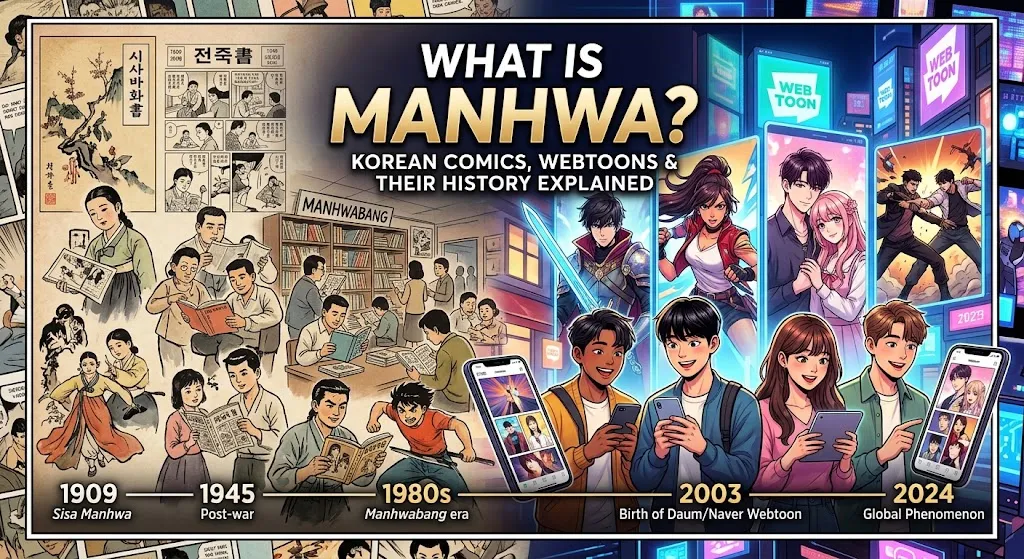
What Is Manhwa?
Manhwa is the general term for Korean comics.
It comes from Korea. It covers many genres. It includes print comics and digital comics. It includes short strips and long epic series.
The word itself simply means “comic” in Korean. It is used the same way “manga” is used in Japan, or “comics” is used in English. The Korean word “manhwa” is written 만화 (漫畫) and literally refers to comics or cartoon drawings.
So manhwa is not one specific style. It is a whole category. It includes romance, fantasy, horror, action, slice of life, and much more.
Manhwa vs. Manga vs. Manhua: What’s the Difference?
These three words often confuse new readers. They sound similar. They are not the same.
Here is the simple breakdown.
| Term | Country of Origin | Language |
|---|---|---|
| Manga | Japan | Japanese |
| Manhwa | Korea | Korean |
| Manhua | China | Chinese |
All three words mean “comic.” Each one just refers to comics from a different country.
Manga
Manga comes from Japan. It is usually printed in black and white. It is traditionally read right to left. Famous examples include One Piece, Naruto, and Attack on Titan.
Manhwa
Manhwa comes from Korea. Modern manhwa is often read top to bottom. Many modern manhwa webtoons are published in full color and designed for vertical scrolling on digital devices.
Manhua
Manhua comes from China. It varies widely in style. Some manhua looks similar to manga. Some looks similar to webtoons.
| Term | Meaning |
|---|
| Manhwa | Korean comics |
| Manga | Japanese comics |
| Manhua | Chinese comics |
| Webtoon | Digital comic format, commonly vertical-scroll |
| Traditional manhwa | Korean comics published in print |
| Modern webtoon | Digital, mobile-friendly comic |
Manhwa vs. Webtoon: What Is the Difference?
Manhwa and webtoon are closely related terms, but they do not mean the same thing. Manhwa refers broadly to Korean comics as a medium or category, while a webtoon refers to a digital comic format and publishing ecosystem, commonly designed for vertical scrolling on smartphones and other digital devices.
A manhwa can be published in traditional print form, while a modern Korean comic may be released digitally as a webtoon. In other words, not every manhwa is a webtoon, although many contemporary manhwa are created specifically for webtoon platforms.
The easiest way to remember the distinction is: manhwa describes what the comic is and where it comes from, while webtoon primarily describes how the comic is published and read digitally. This is why the question “Is manhwa the same as webtoon?” does not have a simple yes-or-no answer: the two concepts overlap, but they are not interchangeable.
A Brief History of Manhwa
Manhwa has a long history. It did not start with webtoons. It goes back much further.
Early Beginnings
Korean comic art existed long before digital platforms. Early manhwa appeared in newspapers. These were simple comic strips. They often included political humor and satire.
Growth Through the 20th Century
Manhwa grew steadily through the 1900s. Print manhwa magazines became popular. Artists explored many genres. These included action, romance, and drama.
Korea also faced periods of censorship. This affected what artists could publish. Despite this, the industry continued to grow.
The Digital Shift
Everything changed in the early 2000s. Internet use exploded in South Korea. Publishers began exploring digital comics.
This shift set the stage for something huge: the webtoon.
What Is a Webtoon?
A webtoon is a digital comic. It is made for scrolling.
Instead of side-by-side pages, webtoons use a vertical scroll format. You scroll down with your thumb. The story flows continuously. There are no page breaks to manage.
This format was built for phones. It fits how people actually read today.
Why the Vertical Format Matters
Traditional comics use fixed pages. Readers flip from one page to the next. This works well in print. It works less well on a small screen.
Webtoons solved this problem. The long vertical strip matches how we scroll social media. Reading feels natural. It feels fast. It feels made for mobile.
Full Color Is Standard
Most webtoons are in full color. This is different from traditional manga, which is usually black and white.
Color adds mood. It adds atmosphere. It helps action scenes feel more dynamic.
How Webtoons Changed the Comic Industry
Webtoons did not just change the format. They changed the entire business model.
Free Access Changed Everything
Many webtoon platforms offer free chapters. Readers can start a series with zero cost. This lowered the barrier to entry massively.
More readers meant more attention. More attention meant more creators wanted in.
Lower Barriers for Independent Creators
Some platforms allow amateur creators to upload their own comics. This created an open pipeline. New artists could build an audience without a traditional publishing deal.
Some of today’s biggest hits started this way. A creator uploaded chapters independently. Readers found the story. Popularity grew. A official platform deal followed.
Global Reach
Webtoons are built for the internet. That means they reach a global audience instantly. A reader in Brazil can follow the same release schedule as a reader in Korea.
This global reach helped manhwa break out of Korea and become an international phenomenon.
Popular Manhwa Genres
Manhwa covers almost every genre imaginable. Here are some of the most popular categories.
Action & Fantasy
These stories often include power systems, leveling up, and epic battles. This genre exploded in popularity thanks to hit titles with game-like progression systems.
Romance
Romance manhwa is one of the biggest categories. Many stories are aimed at a female readership. Common themes include royal courts, reincarnation, and slow-burn relationships.
Isekai & Reincarnation
Many manhwa stories involve a character reborn into another world. Sometimes the character remembers a past life. Sometimes they gain unique knowledge or powers because of it.
Horror & Thriller
Korean horror has a strong reputation. Manhwa horror often focuses on psychological tension. Some stories explore supernatural threats. Others explore very human fears.
Slice of Life
Not every manhwa involves magic or monsters. Slice-of-life manhwa focuses on everyday moments. These stories often explore relationships, growth, and personal struggles.
Why Has Manhwa Become So Popular Worldwide?
Manhwa’s global rise is not an accident. Several factors came together.
1. Mobile-First Design
Webtoons were built for smartphones from the start. This gave them a huge advantage as global smartphone use increased.
2. Easy Discovery
Webtoon platforms use algorithms and rankings. This helps readers discover new series quickly. Trending lists and recommendations keep readers engaged.
3. Frequent Updates
Many webtoons release on a consistent weekly schedule. This builds habit. Readers return each week, similar to how people follow a TV show.
4. Adaptations
Many popular manhwa and webtoons have been adapted into anime, television dramas, films, and other forms of entertainment. These adaptations introduce the source material to entirely new audiences.
5. Diverse Storytelling
Manhwa is not limited to one style or one audience. There is something for nearly every kind of reader. This wide variety keeps the platform appealing to different interests.
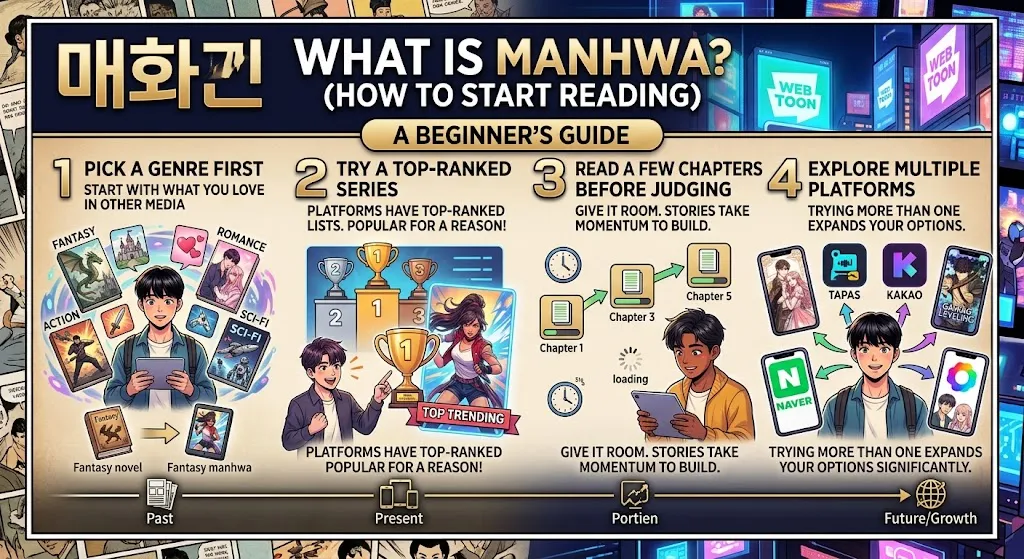
How to Start Reading Manhwa
New to manhwa? Here is a simple approach.
Pick a Genre First
Start with a genre you already enjoy in other media. If you like fantasy novels, start with fantasy manhwa. If you like romance shows, start with romance manhwa.
Try a Top-Ranked Series
Most platforms have trending or top-ranked lists. These are popular for a reason. They are usually a safe starting point for beginners.
Read a Few Chapters Before Judging
Some stories take a few chapters to build momentum. Give a series some room before deciding if it’s for you.
Explore Multiple Platforms
Different platforms host different exclusive titles. Trying more than one platform can expand your options significantly.
Common Myths About Manhwa
There are a few misconceptions worth clearing up.
“Manhwa and Manga Are the Same Thing”
They are not. They come from different countries. They often use different formats and reading directions.
“Webtoons Are a Genre”
Webtoon is a format, not a genre. A webtoon can be romance, horror, action, or anything else. The term simply describes the vertical-scroll digital delivery method.
“Manhwa Is Only for Teens”
Manhwa covers many age ranges and themes. Some titles are aimed at younger readers. Others include mature and complex storytelling meant for adult audiences.
Manhwa’s Impact on Global Pop Culture
Manhwa has moved far beyond a niche interest. It now influences global entertainment trends.
Adaptations bring manhwa stories to screens around the world. Merchandise, fan communities, and fan art continue to grow. Publishers increasingly treat top manhwa titles as major intellectual property, similar to how movie studios treat blockbuster franchises.
This shift shows how far the medium has come. What started as newspaper comic strips has grown into a global entertainment force.
Frequently Asked Questions
Not exactly. Manhwa refers to Korean comics in general. Webtoon refers specifically to the digital, vertical-scroll format. Many modern manhwa are published as webtoons, but not all manhwa is a webtoon.
Usually, yes. Most modern manhwa, especially webtoons, are read top to bottom and left to right, similar to Western comics. This differs from traditional manga, which is typically read right to left.
Most webtoon-style manhwa is in full color. However, some traditional print manhwa is in black and white, similar to manga.
Popularity changes often, but titles involving fantasy action and power progression have consistently topped global charts in recent years. Trending lists on major platforms are the best way to see current top titles.
Yes. There is no required reading order for the medium as a whole. Beginners can start with any series that matches their interests.
It depends on the title. Manhwa covers a wide range of content, including stories for younger readers and stories with mature themes. Always check content ratings before starting a series.
Final Thoughts
Manhwa is more than just “Korean comics.” It represents decades of storytelling evolution. It represents a major shift in how comics are made, shared, and read.
The rise of the webtoon format changed the industry forever. It made comics faster to read, easier to discover, and simpler to access from anywhere in the world.
Whether you are drawn to fantasy, romance, horror, or slice-of-life stories, manhwa likely has something for you. The best way to understand it is simple: pick a series, start scrolling, and see where the story takes you.
Sources
- Korea Creative Content Agency (KOCCA). Korean Comics and Webtoon Industry Resources. https://eng.kocca.kr/en/main.do
- Korean Culture and Information Service (KOCIS). How Webtoons Swept Korea. https://www.kocis.go.kr/eng/webzine/202011/sub01.html
- Koreana. Webtoons Scroll to the Top Worldwide. https://www.koreana.or.kr/koreana/na/ntt/selectNttInfo.do?bbsId=1114&nttSn=1
- WEBTOON. Creator Resource Handbook. https://webtoons-static.pstatic.net/creator101/en/pdf/Creators-Resource-Handbook.pdf
- Ministry of Culture, Sports and Tourism of the Republic of Korea. Webtoon Industry Revenue in 2022 Reaches KRW 1.829 Trillion, Setting New Record. January 18, 2024. https://www.mcst.go.kr/english/policy/pressView.jsp?pSeq=354
- Ministry of Culture, Sports and Tourism of the Republic of Korea. Positioning Korea’s Platform as the “Netflix of the Comics and Webtoon World”. January 24, 2024. https://www.mcst.go.kr/english/policy/pressView.jsp?pSeq=356
Leave a Reply